
When you’re shopping for your first serious timepiece or trying to figure out which brand actually deserves a spot in your collection, the term “luxury watch” gets thrown around loosely. Not every expensive watch is a luxury watch, and not every luxury watch brand carries the same weight. If you’re researching the top luxury watch brands in the world, you need more than a list of famous names. You need to understand what actually separates a brand with genuine luxury credentials from one that’s simply expensive.
What Makes a Watch Brand “Luxury”?
Before you compare specific brands, it helps to know what you’re actually evaluating. Four factors separate a luxury watch brand from a merely expensive one.
Company history. Heritage matters in this industry more than almost any other consumer category. Brands like Vacheron Constantin and Patek Philippe have been in continuous operation since the 1700s and mid-1800s, respectively, and that unbroken lineage of watchmaking knowledge is part of what you’re paying for.
Materials. Luxury houses use precious metals like 18k gold and platinum, along with sapphire crystal (a scratch-resistant material used for the watch face instead of standard glass). Many also source their own metal alloys, like Rolex’s proprietary 904L steel, custom blends engineered to be more durable than off-the-shelf materials, so they can control quality at every stage rather than relying on generic suppliers.
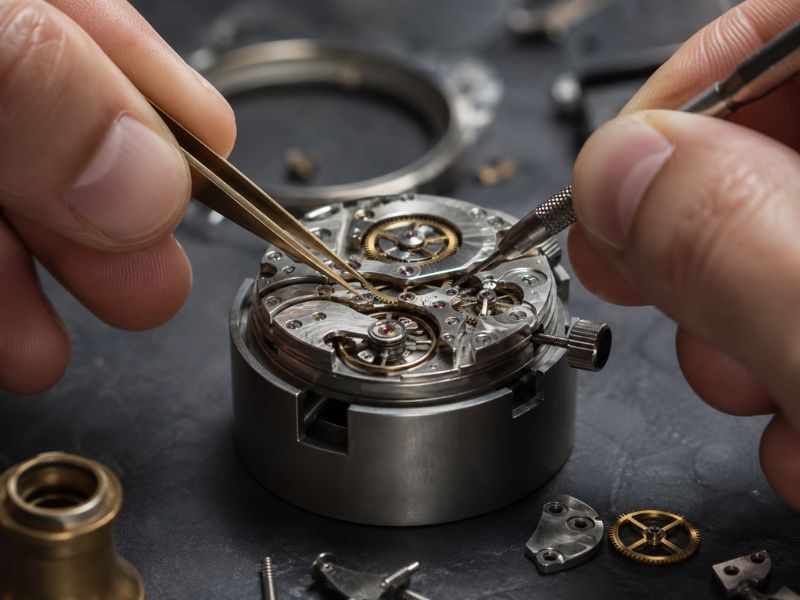
In-house mechanics. The “movement” is the mechanism inside a watch that makes it run. True luxury brands design and manufacture their own movements, known as an in-house caliber, rather than buying a mass-produced one shared across multiple brands. Some of these movements include complications like a tourbillon (a rotating mechanism that improves accuracy), a perpetual calendar, or a minute repeater (a chime that sounds the time on demand). Building this in-house reflects a level of engineering that off-the-shelf movements can’t replicate.
Hand-finishing. This is where the labor becomes visible, even in places you’ll never see. Techniques like anglage (hand-beveling the edges of internal parts), Geneva stripes, and perlage (two types of decorative finishing on movement components) are still done by hand at the top houses. This handwork is a major reason a single watch can take weeks or months to complete.
Understanding these four pillars will help you evaluate any brand you come across, not just the ones on this list.
Rolex
Rolex is the name most people think of first, and for good reason. Founded in 1905, Rolex built its reputation on precision and durability rather than ornamentation. It was the first brand to achieve a wristwatch chronometer certification and the first to develop a waterproof case, the Oyster, in 1926.
What sets Rolex apart among top luxury watch companies is its balance of prestige and practicality. Models like the Submariner, Datejust, and Daytona are recognizable, durable, and hold their value exceptionally well on the resale and collateral market. Rolex remains privately held and manufactures nearly every component in-house, including its own gold alloys.
Vacheron Constantin
Vacheron Constantin has been producing watches continuously since 1755, making it the oldest watch manufacturer in the world still in operation. It’s part of the so-called “Big Three” alongside Patek Philippe and Audemars Piguet, a group generally considered the pinnacle of traditional Swiss haute horlogerie.
Vacheron Constantin is known for extreme complications and its Hallmark of Geneva certification, a quality seal that guarantees a level of finishing and craftsmanship on movements produced within the canton of Geneva. If you’re drawn to intricate, historically rooted watchmaking rather than sporting utility, this is a brand worth researching further.
Patek Philippe
Patek Philippe, founded in 1839, is often considered the single most prestigious watch brand in the world. It holds patents for the perpetual calendar mechanism and the chronograph, and its Grand Complications collection represents some of the most technically demanding watchmaking produced anywhere.
Patek Philippe watches are known to hold and increase in value more consistently than nearly any other brand, particularly discontinued or limited references. The brand’s own marketing line, “You never actually own a Patek Philippe. You merely look after it for the next generation,” reflects how the company positions its watches as multi-generational assets rather than simple purchases.
Audemars Piguet
Audemars Piguet, founded in 1875, rounds out the “Big Three.” It’s best known for the Royal Oak, designed by Gérald Genta in 1972, which was revolutionary for putting a steel sports watch into the luxury category at a time when steel was considered a lesser material.
Audemars Piguet remains family-owned, a rarity among the top luxury watch brands, and continues to produce complicated movements largely by hand at its manufacture in Le Brassus, Switzerland.
Cartier
Cartier began as a jeweler in Paris in 1847 before becoming one of the most recognized names in luxury watches. Its Tank watch, introduced in 1917 and inspired by the shape of military tanks used in World War I, remains one of the most iconic designs in watch history.
Cartier sits at the intersection of jewelry and horology, which is part of why it appeals to buyers who want a luxury watch with a strong design identity rather than a pure tool-watch aesthetic. Models like the Santos and Panthère are frequently cited among the best luxury watch brands’ output for women specifically, though Cartier produces widely across genders.
Richard Mille
Richard Mille is the newest name on this list. Founded in 2001, it represents a different approach to luxury watchmaking entirely. Rather than leaning on centuries of heritage, Richard Mille built its reputation on aerospace-grade materials, extreme skeletonized designs, and eye-watering price points that regularly place it among the most expensive watches sold at auction.
If you’re comparing high end watches based on innovation and material science rather than tradition, Richard Mille is worth researching. Its watches use materials like carbon nanofiber, titanium alloys, and sapphire cases, several of which the brand pioneered for use in watchmaking.
Omega
Omega, founded in 1848, occupies a slightly different tier than the brands above, often described as “accessible luxury” or the entry point into prestige watch brands. Omega’s Speedmaster earned its reputation as the first watch worn on the moon, selected by NASA in 1965 after rigorous testing for space missions.
Omega offers a strong combination of history, in-house movement technology (notably its Co-Axial escapement), and price points that are meaningfully lower than the Big Three, making it a common recommendation for someone entering the luxury watch category for the first time.
TAG Heuer
TAG Heuer, with roots dating back to 1860, built its identity around motorsport and precision timing. The brand has a long association with Formula 1 and was the first Swiss watchmaker to develop a chronograph accurate to 1/100th of a second, the Mikrograph, in 1916.
TAG Heuer generally sits at a more attainable price point than the other premium watches on this list, which makes it a frequent recommendation if you want a recognizable, well-made luxury watch without the price tag of a Patek Philippe or Vacheron Constantin.
Men’s vs. Women’s Luxury Watches
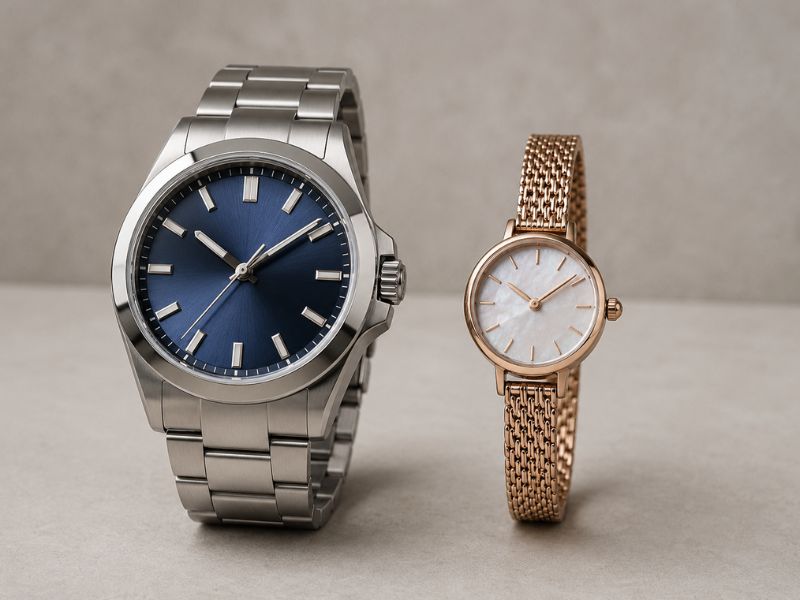
The biggest difference between men’s and women’s luxury watches typically comes down to case size and design emphasis rather than mechanics. Men’s luxury watches historically trend toward 38mm to 44mm cases with an emphasis on complications, sport functionality, or bold design statements.
Women’s luxury watches have traditionally trended smaller, often in the 26mm to 34mm range, and have historically leaned more into jewelry-forward design, gemstone settings, and brands like Cartier that blend fine jewelry with horology. That said, this distinction has been shifting. Many brands, including Rolex and Cartier, now market midsize and larger cases as unisex, and collectors of any gender increasingly choose watches based on personal preference rather than traditional sizing conventions.
What You Need To Know About The Top Luxury Watch Brands Before Purchasing
Choosing among the top luxury watch brands comes down to what you value most: heritage and complication (Vacheron Constantin, Patek Philippe), design and sport heritage (Rolex, Audemars Piguet), design and jewelry crossover (Cartier), material innovation (Richard Mille), or accessible entry points into the category (Omega, TAG Heuer). Many of these pieces also function as collectible watches, appreciating in value well beyond their original purchase price.
Whatever brand you land on, luxury watches represent both a personal statement and, often, a genuine financial asset. If you’re looking to buy designer watches, sell one, or use a piece you already own as collateral for a private loan, PCL Group offers confidential, appointment-based consultations in downtown Jacksonville. Every evaluation is handled one-on-one, with no walk-in counter and no rushed conversation, so you get an accurate assessment of your watch’s value from people who understand the category.
The Top Luxury Watch Brands: FAQs
Rolex is widely regarded as the most reliable luxury watch brand due to its in-house movement production, rigorous chronometer certification (COSC), and use of proprietary materials like its 904L steel alloy. Its watches are engineered for daily wear and long-term durability rather than delicate handling.
The “Big Three” refers to Patek Philippe, Vacheron Constantin, and Audemars Piguet. These three Swiss manufacturers are traditionally considered the pinnacle of haute horlogerie due to their long histories, in-house complications, and consistently high resale values.
Omega and TAG Heuer are generally considered the best entry points into luxury watch collecting. Both brands offer recognizable heritage, solid in-house or co-developed movements, and price points well below the Big Three or independent houses like Richard Mille, making them accessible without sacrificing brand credibility.
