
To the untrained eye, it can be nearly impossible to tell if a piece of gold is authentic or fake. Anyone looking to buy gold wants to make sure they have the purest, shiniest gold possible. The problem is that you may be buying gold that looks real but is actually fake. Plenty of counterfeiters sell fake gold that looks just like the real thing. The good news is that there are ways of determining whether a piece of gold is real or fake. Understand how to tell if gold is real so you can make the right choice before buying or selling gold.
Key Takeaways: How to Tell if Gold is Real?
- Do a hallmark check of your gold to see if it has a karat stamp that will tell you if it’s real gold (24K gold).
- Real gold has a rich, warm color, while fake gold is duller and often peels or scratches off, revealing the base metal underneath.
- Typical base metals covered in a layer of gold to look like real gold include brass, copper, nickel, and steel.
- Different types of fake gold include pyrite, plated gold, gold filled, brass & copper alloys, and gold vermeil.
How to Determine if Your Gold is Real
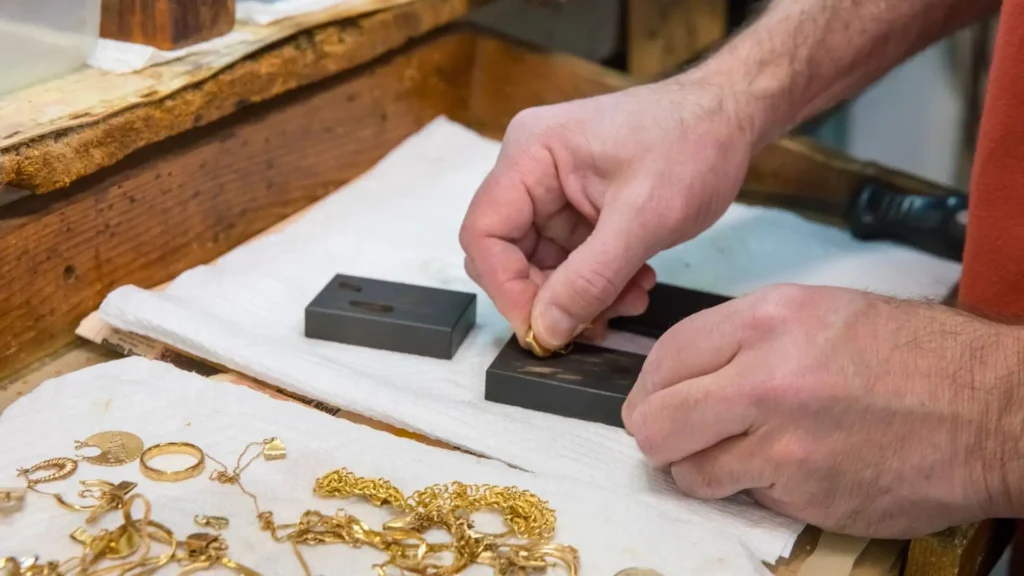
You can do checks to see if your gold is real gold by looking for hallmarks that indicate the gold is real, as well as specific tests for certain qualities such as color, density, and magnification. These tests all can help you understand how to tell if gold is real.
Hallmarks
Hallmark checks are essentially a visual inspection of your gold to determine if it’s real. One of the checks you can do is to look for karat stamps that may be inscribed on the gold, indicating how much karat is in the gold (10K, 14K, 18K, or 24K). A high karat number like 18K or 24K means your item is mostly real gold. There also might be purity codes printed on the gold to indicate how pure the gold is. However, fake gold items may have fake stamps on them, so be wary of that. Another indication of fake gold is signs of wear and tear. Discoloration or peeling are indications of gold plating that masks a base metal.
Color Test
If your gold has a rich, warm glow, it is likely real gold. If you look at it and notice signs of wear and tear and the gold layer is wearing off, it’s likely your gold isn’t solid gold. You may be able to notice the base metal hiding underneath and a dull finish that screams fake gold.
Magnetic Test
If you have a magnet on hand, you can perform a magnetic test to determine if your piece is real gold. If your piece is attracted to your magnet, it means the piece isn’t real gold, since real gold is not magnetic.
Density Test
A simple test involving a glass of water, a scale, and some simple math can help you determine the density of your piece and understand whether or not that density indicates the presence of real gold. What this test will do is verify the density of your piece. If the density you calculate is close to the standard gold density of 19.3 grams per cubic centimeter, you know your piece is real gold. What you have to do is first place the gold on a scale to measure its weight in grams. Next, fill a glass or a container with water high enough so that the water can completely submerge your piece of gold. Make a note of how high the water level is in milliliters. Then, put the gold into the water and measure the new water level. The difference between the two measurements is the gold’s volume. Divide the weight you took earlier by the volume to find the density. If that number is around 19.3, you have real gold.
Scratch Test
In order to conduct a scratch test, you have to scratch your gold with a piece of unglazed ceramic or white tile to leave a clear scratch mark. If the scratch is gold in color, your jewelry is real gold. If the mark is black, it means the gold is mostly made of some other material.
Acid Test
An acid test is done using a black touchstone and bottles of nitric acid that go with different gold karats. Scratch your gold across the touchstone to leave a mark, then apply a small amount of the nitric acid on the mark. Do this for each of the different karats (10K, 14K, 18K, 24K) and watch what happens. If the streak is still visible and doesn’t dissolve, you have real gold. If it does dissolve or bubble or change colors, it is fake gold of a lower karat.
Sound Test
You can tell if you have real gold based on the sound gold makes when struck by a metal object. Tap lightly on a piece of gold with something like a coin or some sort of small metal object. Listen to the sound produced by the “ping” it makes. If it makes a high-pitched ringing, it’s real gold. If it produces a “thud” or a dull, flat sound, your piece has more base metals than actual gold.
If you’re trying to test gold at home, you should know that these methods are not 100% accurate. It’s better to consult a professional before buying or selling larger quantities of gold.
Counterfeit Or Imitation Gold
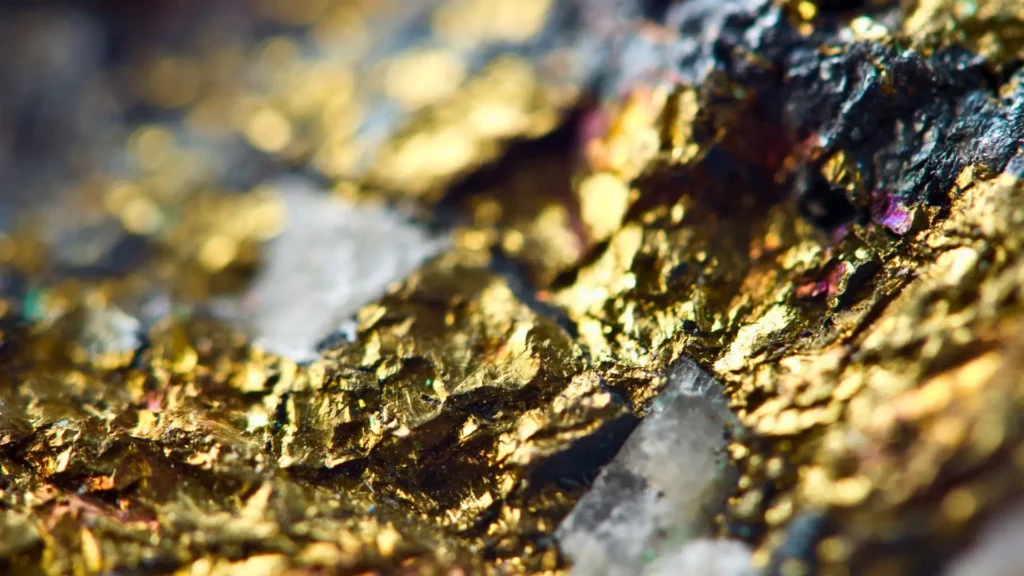
Fake gold may look exactly like real gold, but you will find it’s lacking in pure, solid gold. Fake gold typically is made up mostly of solid metals like brass, copper, or steel, but it’s coated with a layer of gold to look like the real thing. Not all fake gold is exactly the same. There are different types of fake gold to be on the lookout for.
Pyrite
With a brassy yellow color and a metallic shine, pyrite certainly looks like real gold. It’s actually an iron sulfide mineral. You can tell it’s different from real gold because it is much more brittle than real gold. It’s very easy to break and shatter pyrite; the same cannot be said for real gold. You’ll also notice the streak it leaves on touchstone is a greenish-black color, not the gold color you would expect from real gold.
Brass & Copper Alloys
Brass and copper are not actually gold – they are metal alloys that have a bright appearance that often look like gold. Copper is a pure, natural element with a reddish-orange color, while brass is a copper alloy with a bright, gold-color appearance that is easy to bend and shape. Often, these alloys will be covered with a layer of gold to give them a gold-like appearance.
Lower Quality Gold Products
Plated Gold
This isn’t really gold so much as it’s a thin layer of gold that’s bonded to the surface of a base metal. Plated gold typically consists of a base metal like brass, copper, or nickel. Electrolysis is used to coat this base metal in a gold layer. The layer is real gold but is so thin that it doesn’t do much to make the material real gold. All it does is change the appearance.
Gold-Filled
Similar to plated gold, gold-filled also is a base metal that features a layer of real gold on the outside. In this case, the gold layer is pressure bonded to a base metal. Gold plated uses a very thin layer of coating, whereas gold-filled uses far more gold, making up at least 5% of the item’s total weight.
Gold Vermeil
Gold vermeil gives jewelry a high-end, gold appearance, but these pieces have little more than a thick layer of real gold. This layer is plated over a sterling silver base. Gold vermeil has a base metal of 92.5% sterling silver and a thick outer gold coating. Gold vermeil is noted for its thickness – five times thicker than standard gold plating. The purity of gold vermeil is typically 14K or 18K. The appeal of gold vermeil is that it looks and feels like solid gold, but it’s not, and it’s certainly more affordable.
Real Gold vs. Fake Gold: Side by Side Comparison
Real gold has that distinctive rich, warm gold color, whereas fake gold has a shiny appearance, but will begin to look duller due to wear and tear. Fake gold only has a layer of gold that covers base metals. This layer can scratch and wear off easily. Real gold will also feel heavier when you hold it in your hand. Gold that is light and breaks or scratches easily is fake gold.
Always Verify the Authenticity of Gold Before Purchasing
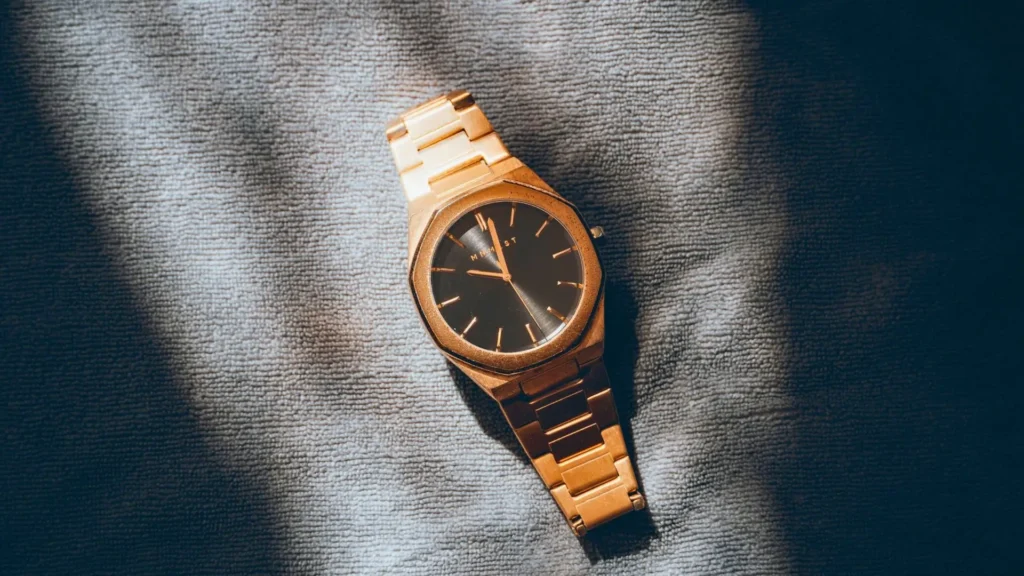
If you’re going to buy gold, make sure you know what you’re buying is actually gold. You can do a visual inspection of your gold for identifiable characteristics of gold, as well as a number of tests to check your gold’s color, magnetism, density, strength, and sound, all of which can verify whether or not your piece is real gold. Know that there are many items out there that may look like gold but are actually just base metals with a gold coating.
Looking to buy or sell gold? Contact The PCL Group in Jacksonville or St. Augustine. We can help you understand how to tell if gold is real and answer all your gold questions as you browse our inventory of gold coins, bullion, and jewelry.
How to Tell if Gold is Real: FAQs
A vinegar test can be used to see how your gold reacts to being covered in white vinegar. Real gold will not react at all, while fake gold will fizz and begin to discolor.
The most accurate test for gold is XRF testing using an X-ray device to shine an X-ray beam onto a gold item and cause an atomic reaction. Gold will emit X-ray fluorescence, which are secondary X-rays coming off the reflected piece. The XRF machine will also give you a purity readout to determine just how much purity your piece of gold has (the higher, the better). This test is instant, safe to try, and highly thorough, revealing fake gold items if no X-ray fluorescence is present.
The density of gold is 19.3 grams per cubic centimeter. Trying to replicate this density for a fake is extremely hard. The closest match with a fake is tungsten, which has a density of 19.25 grams. An XRF machine will easily show, however, that tungsten is not real gold.
A toothpaste test can be done using plain white toothpaste. Squeeze a tiny amount of toothpaste on your item and gently rub it along the surface for 30 to 60 seconds. Afterwards, run your piece under water to wash all the toothpaste off. If you noticed the metal has discolored or darkened, it means your piece was hiding a base metal underneath and is not real gold.